I did not set out to become a notary. I set out to cancel subscriptions.
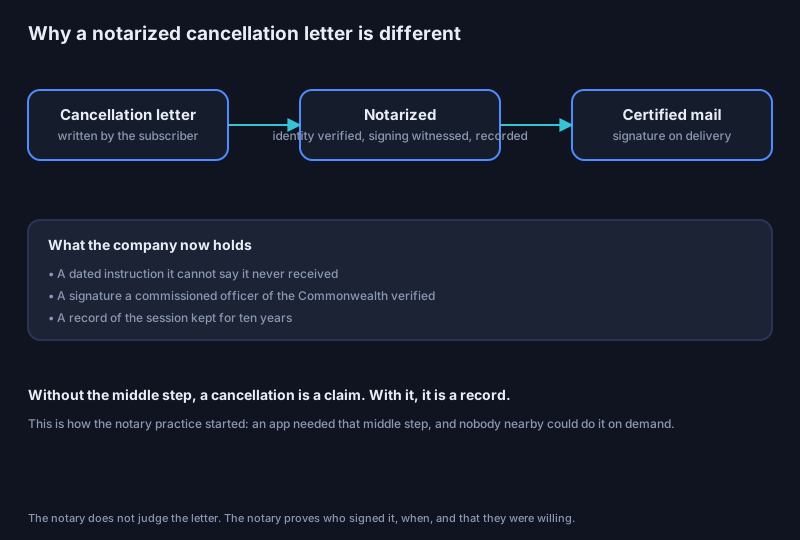
Earlier this year I built a small app, ezCancel, that does something most people have given up on: it writes the cancellation letter, prints it, and sends it by certified mail, so the company has to sign for it and can no longer claim it never arrived. It worked. And then I noticed the letters that got results fastest were the ones that had been notarized. A signed letter is a claim. A notarized one is a record: a commissioned officer of the Commonwealth has verified who signed it, when, and that they did so willingly. Companies treat the second kind differently, because their lawyers do.
The app needed that step, on demand, every day, and there was no one to do it. So I became the one. This piece is about what that took, what a remote notarization actually is, what it is for, and where Hereby Notary goes from here. It is also, like the last piece, partly about building a business alongside AI without letting it run you.

Three credentials, in order
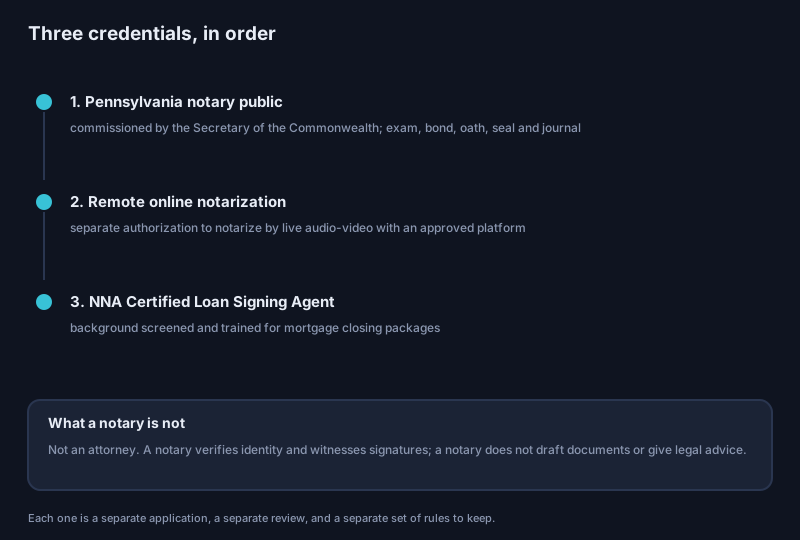
People imagine a notary stamp is something you buy. It is closer to a small license to be trusted by strangers, and Pennsylvania takes it seriously. The commission comes from the Secretary of the Commonwealth after a required course, an exam, a bond, and an oath of office; with it come a seal, a journal that must record every act, and a set of rules about what you may and may not do that run longer than most people expect.
Notarizing by video is a separate authorization on top of that. Pennsylvania allows remote online notarization, but only through an approved platform, only with identity checks the law spells out, and only with a recording of the session kept for ten years. I use BlueNotary, which is on the state's approved list.
The third credential is the National Notary Association's Certified Loan Signing Agent, which means a background screening and training in the specific, unforgiving paperwork of a mortgage closing, where one missed initial can send a hundred-page package back to the lender.
Then the ordinary work of standing up a practice: registering the business, taking an office in Philadelphia for the signings that still happen in person, building the website at herebynotary.com so that it hands a booking straight to the notarization platform, and, because I am a developer before I am anything else, writing my own intake software so that a client can order a notarization, upload the document, and get a confirmed time without a phone call. The business cards came last.
I will say one thing plainly, because a notary who blurs it loses the commission: none of this makes me a lawyer. A notary verifies identity and witnesses signatures. A notary does not draft your document, does not tell you whether to sign it, and does not give legal advice. The value of the stamp depends on that line staying bright, and I would rather lose a booking than cross it.
What a remote notarization actually is
Most people have had a document notarized at a bank, where a teller looked at a license and pressed a stamp. Remote online notarization is the same act done with more rigor, not less, from wherever you happen to be.
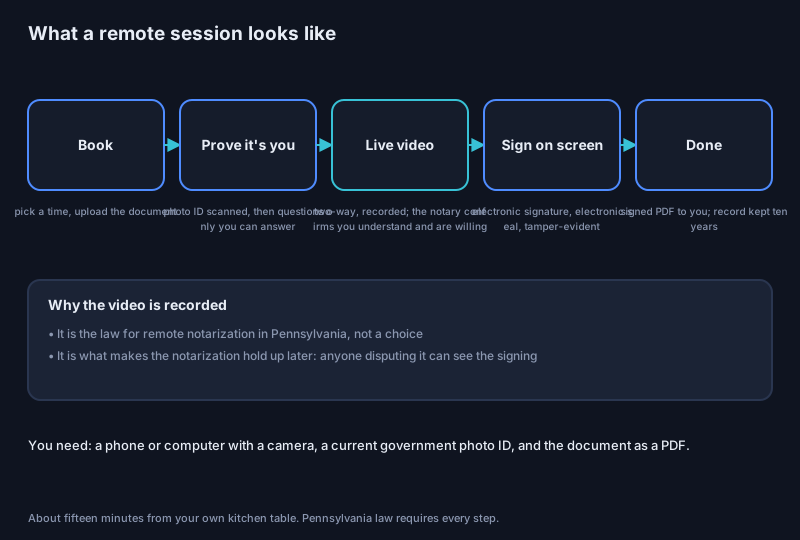
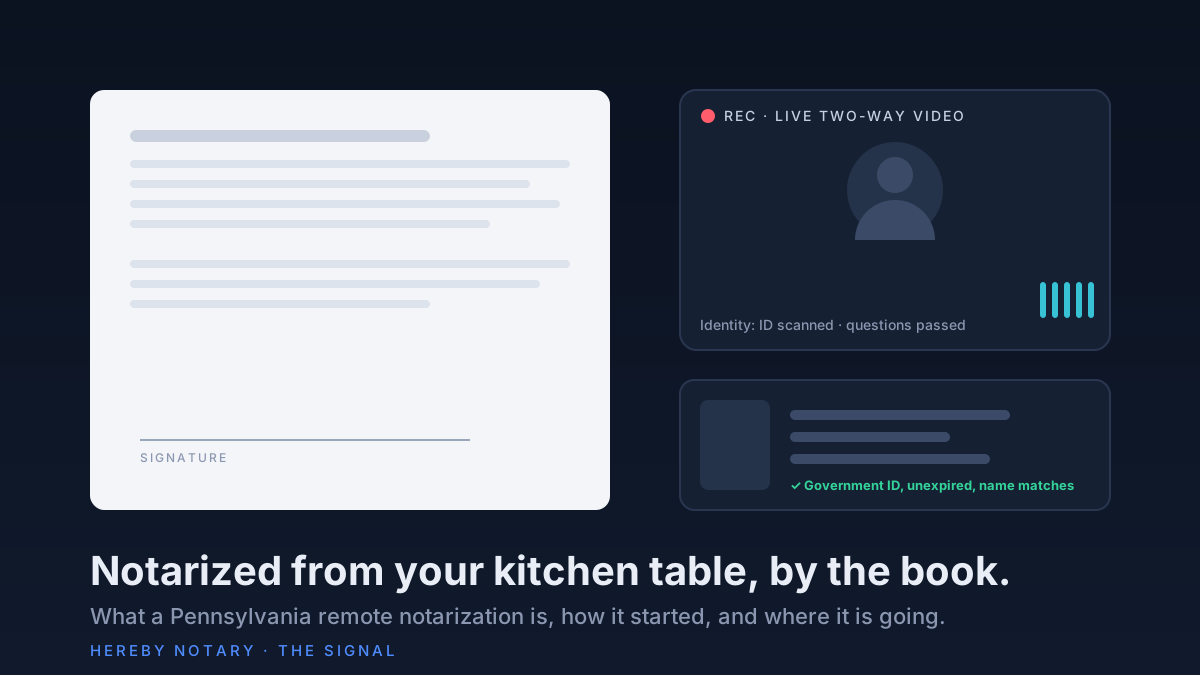
You book a time and upload the document. Before we ever see each other, the platform checks your government ID, photographs front and back and analyzed for tampering, and then asks you a short set of questions pulled from public records that only you would know, the same kind a credit bureau uses. Then we meet on a live, two-way video call. I confirm you are who the ID says, that you understand what you are signing, and that nobody is making you sign it. You sign on screen. I apply an electronic seal, and the document is sealed in a way that shows any later change. You receive the signed PDF; the recording and my journal entry are kept for a decade.
Why record it? Because that is what makes the notarization hold up. If anyone ever disputes a signature, the signing itself can be watched. The bank teller's stamp never had that.
What people use it for
The cancellation letters are where it started, and they still run through it every day. But the bookings that come in on their own are the ones families need at the worst possible time: a power of attorney for a parent who is suddenly in the hospital, signed from the daughter's kitchen in another state. A car title changing hands across a state line. A lease for a landlord who lives nowhere near the property. A permission letter so a grandchild can travel with a grandparent. The closing package for a house, signed at the dining table instead of a title company's conference room.
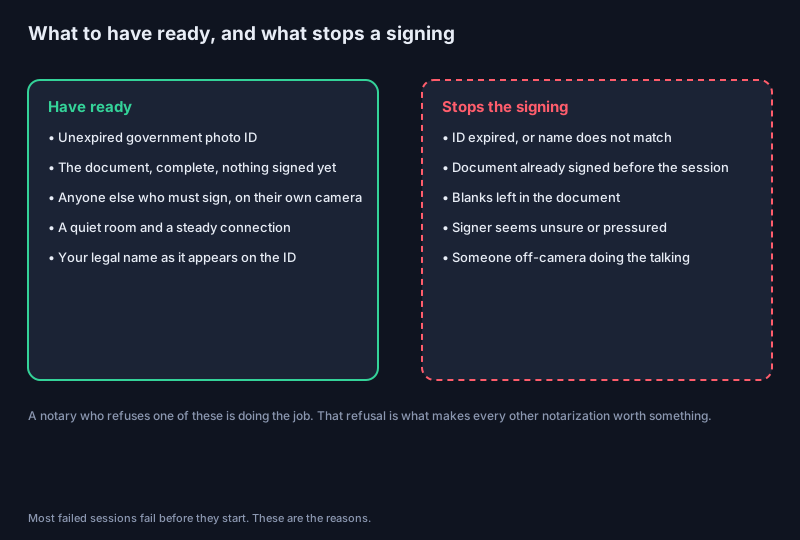
If you ever need one, the list in Figure 4 is the whole secret. An unexpired government ID whose name matches the document. The document complete, with no blanks and nothing signed ahead of time. Anyone else who has to sign, on their own camera. And the thing people do not expect: if a signer seems unsure, or someone off camera is doing the talking, the session stops. A notary who refuses is doing the job. That refusal is what makes every other notarization worth something.
Building a practice alongside AI
I used an AI assistant for nearly everything that was not the notarizing itself: researching the state's rules, drafting the intake software, building the website, writing the checklists clients get before a session. It was a tireless, well-read colleague who had never once held a commission, and that turned out to be exactly the right way to think about it.
It was excellent at the volume of the work. The intake system, booking to document upload to confirmed slot, was built in an evening. The client checklist is better than the one I would have written, because it had read more of them.
It was dangerous in one specific way. It would describe how a platform's interface worked, or what a rule required, in complete, confident sentences that were sometimes a version old or simply wrong. In a business where the entire product is that a careful person verified something, I cannot publish a confident guess. So the working rule became: the AI drafts, the Department of State's own pages decide, and anything about law or procedure gets checked against the source before it reaches a client. That is not a limitation of the tool. It is the job description of the human.
There is a version of this story where AI makes the notary obsolete. I think the opposite is true. The more documents are generated, signed and sent by software, the more it matters that somewhere in the chain a person looked another person in the eye, in a recorded room, and said: yes, this is you, and you mean it.
Where Hereby goes
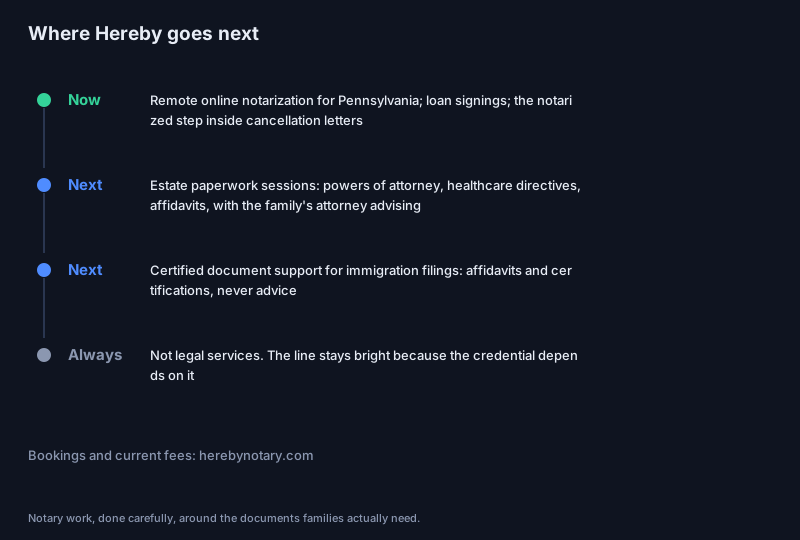
Two directions, both about families and paperwork at hard moments. Estate documents: powers of attorney, healthcare directives, affidavits, the things a family needs witnessed properly while a parent can still sign, with the family's attorney doing the advising and Hereby doing the notarizing, on video, on short notice. And certified document support for immigration filings: the affidavits and certifications those applications require, done correctly and quickly, with the clear understanding that advice about the case itself comes from an attorney or an accredited representative, never from a notary. Pennsylvania is rightly strict about that, and so am I.
It fits with the rest of what I build: tools that protect older people and help families look after them, software that keeps them from being scammed, and the camera work that lets a city see what its cameras see. A notary is the low-tech version of the same idea: a person whose whole job is to make sure nobody is being fooled.
Bookings, current fees and the pre-session checklist are at herebynotary.com. If you are in Pennsylvania and have ever needed something notarized at a bad time, I would like to be the person you call.